
How to use a BMI Calculator for health assessment
Learn to calculate and interpret BMI (Body Mass Index). Understand BMI categories, limitations, and how to use BMI as part of a comprehensive health assessment.
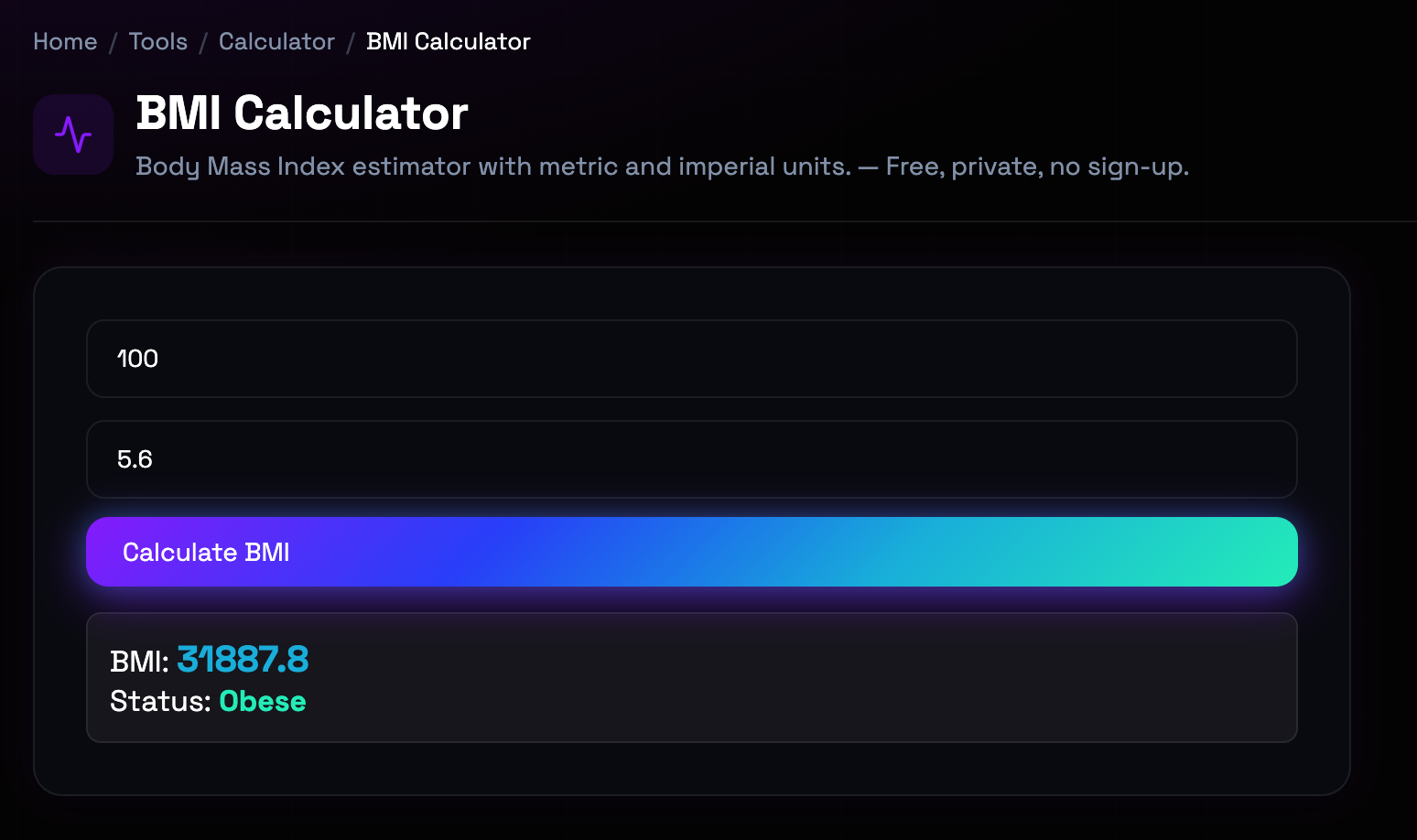
What is the BMI Calculator?
Body Mass Index (BMI) is a screening tool that estimates body fat based on height and weight. Calculated as weight in kilograms divided by height in meters squared, BMI provides a simple numeric indicator of whether a person is underweight, normal weight, overweight, or obese. While BMI is not a direct measure of body fat, it correlates reasonably well with more direct measures for most people. However, BMI has important limitations—it doesn't distinguish between muscle and fat, nor does it account for fat distribution. Understanding both BMI's utility and its limitations is essential for using it effectively as part of health assessment.
Step-by-Step: How to Use It
- Enter Your Height: Input your height in feet and inches (imperial) or centimeters (metric). The calculator automatically converts between units. (height input fields with unit toggle)
- Enter Your Weight: Input your weight in pounds (imperial) or kilograms (metric). Ensure accuracy for reliable BMI calculation. (weight input fields with unit toggle)
- Calculate Your BMI: Click the calculate button to compute your BMI. The result appears instantly with your weight category. (calculate button with result display)
- Review Your Category: See where your BMI falls: underweight (<18.5), normal (18.5-24.9), overweight (25-29.9), or obese (30+). Consult healthcare providers for interpretation. (category display with color-coded ranges)
Top Use Cases
- Personal Health Monitoring: Track BMI over time to monitor weight trends. Regular calculation helps identify gradual weight gain or loss before it becomes significant. Example: Monthly BMI tracking shows a gradual increase from 24 to 27 over six months, indicating a trend toward overweight that can be addressed early.
- Fitness Goal Setting: Use BMI as a baseline metric when setting weight-related fitness goals. Calculate target weight ranges for desired BMI categories. Example: A person at 5'10" and 200 pounds (BMI 28.7) calculates they need to reach 174 pounds to achieve normal BMI (24.9).
- Medical Preparation: Healthcare providers often request BMI information during medical visits. Calculate beforehand to have accurate data ready. Example: Preparing for a physical exam: calculate current BMI to discuss with the doctor alongside other health metrics.
- Population Health Assessment: Public health researchers use BMI statistics to track population health trends and identify obesity prevalence in communities. Example: A workplace wellness program calculates average BMI across employees to assess overall health and target interventions.
Things to Watch Out For
- Muscle vs Fat: BMI doesn't distinguish between muscle mass and fat mass. Athletes with high muscle mass may have elevated BMI despite low body fat. Workaround: For muscular individuals, consider additional measures like body fat percentage, waist circumference, or body composition analysis.
- Age and Gender Variations: BMI categories are the same for adults regardless of age or gender, but optimal BMI varies by these factors. Older adults may benefit from slightly higher BMI. Workaround: Interpret BMI in context of age, gender, and overall health. Consult healthcare providers for personalized assessment.
- Fat Distribution: BMI doesn't account for where fat is stored. Visceral fat (abdominal) carries more health risk than subcutaneous fat. Workaround: Combine BMI with waist circumference measurement. Waist-to-hip ratio provides additional insight into fat distribution.
- Not Diagnostic: BMI is a screening tool, not a diagnostic. It doesn't directly measure health or body fat percentage. Workaround: Use BMI as one indicator among many. Combine with other health metrics and professional medical assessment for complete picture.
Frequently Asked Questions
What are the BMI categories and what do they mean?
BMI categories are: Underweight (below 18.5), Normal weight (18.5-24.9), Overweight (25-29.9), and Obese (30 and above). These categories are based on associations between BMI and health outcomes in population studies. Normal weight is associated with lowest health risks. Underweight may indicate malnutrition or health issues. Overweight and obese categories correlate with increased risk of cardiovascular disease, diabetes, and other conditions. However, individual health varies within categories.
Is BMI accurate for athletes and bodybuilders?
BMI is often inaccurate for athletes and bodybuilders because it doesn't distinguish muscle from fat. Muscle is denser than fat, so muscular individuals may have high BMI despite low body fat percentage. A bodybuilder at 5'10" and 220 pounds might have BMI 31.6 (obese category) but only 10% body fat. For such individuals, body composition measures like DEXA scans or caliper measurements provide more accurate health assessment than BMI alone.
How does BMI differ for children and adults?
BMI calculation is the same for children and adults, but interpretation differs. For adults, standard BMI categories apply regardless of age. For children and teens (2-20 years), BMI is compared to age- and sex-specific growth charts from the CDC. A child's BMI percentile indicates how they compare to others of the same age and sex. Children above the 95th percentile are considered obese. Our calculator is designed for adults—use pediatric BMI calculators for children.
What is a healthy BMI range?
For most adults, a BMI between 18.5 and 24.9 is considered normal or healthy weight. This range is associated with lowest risk of weight-related health problems. However, 'healthy' varies by individual. Some people with BMI in this range may still have health issues if they have poor diet or low fitness. Others with slightly higher BMI may be healthy if they're muscular or have good fitness. BMI is one indicator among many—consult healthcare providers for personalized assessment.
Should I aim for a specific BMI number?
Rather than fixating on a specific BMI number, focus on overall health behaviors: balanced diet, regular physical activity, adequate sleep, and stress management. BMI can be a useful tracking metric, but it shouldn't be the sole goal. If your BMI is outside normal range, work with healthcare providers to develop a sustainable plan that considers your overall health, not just the number. Gradual, sustainable changes are more effective than rapid weight loss to hit a target BMI.
How often should I check my BMI?
For general health monitoring, checking BMI every 1-3 months is sufficient. More frequent checks aren't necessary because BMI changes gradually with weight changes. Track trends over time rather than individual measurements. If you're actively working on weight management, monthly checks can help monitor progress. Remember that BMI fluctuates with normal weight variations—focus on long-term trends rather than day-to-day changes. Combine BMI tracking with other health metrics for comprehensive monitoring.
Ready to get started?
Access the tool immediately. No sign-up or credit card required.
Open BMI Calculator